
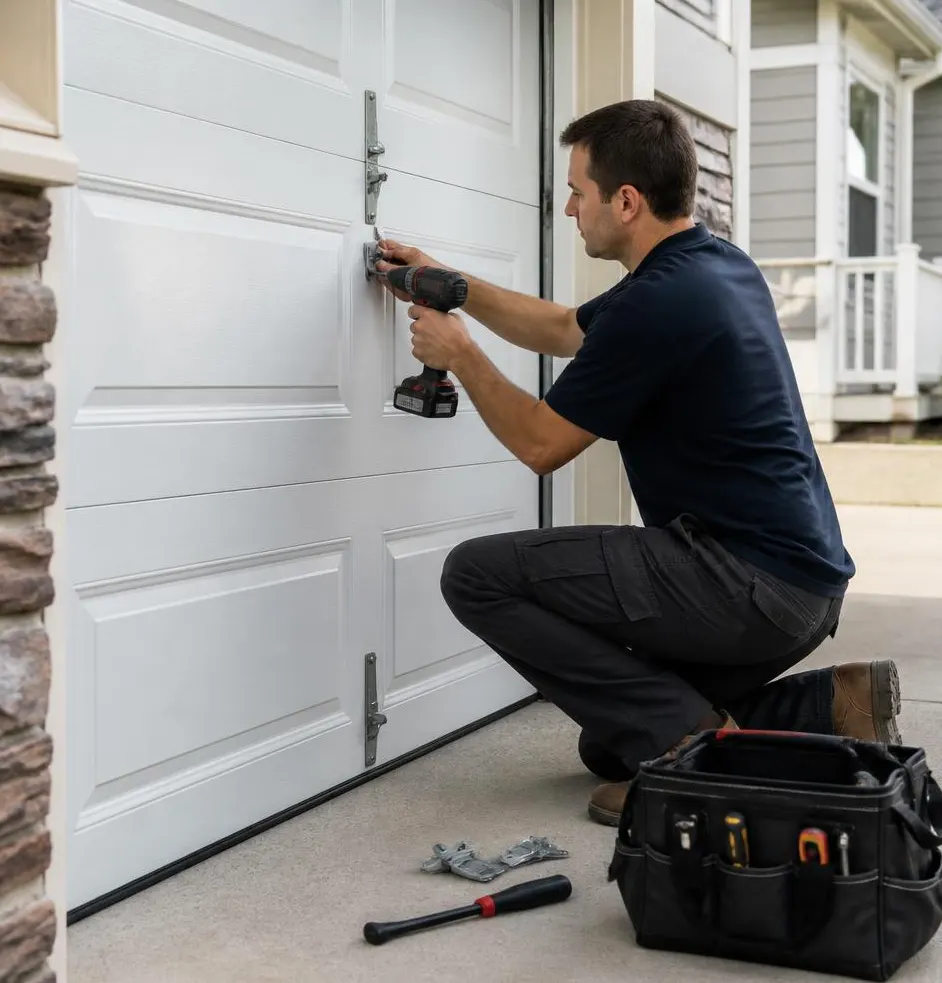
What a Skipped Fall Inspection Actually Costs You
Put off garage door maintenance through another dry season and the bill usually comes due the first cold, wet morning of winter. A spring that's been quietly corroding behind a worn coil finally snaps when the steel contracts in the cold, leaving a 150-plus pound door stuck halfway open. A weatherstrip that cracked in September's heat lets rainwater pool under the door, warping a wood panel or soaking stored boxes. An opener that's been straining against dry, dusty rollers all summer finally burns out its motor the week you need it most. None of these are dramatic failures — they're slow ones, and by the time you notice, you're paying for an emergency call instead of a routine tune-up.
Why This Transition Season Is Hard on Garage Doors
Santa Fe Springs spends most of the year dry, which means dust, pollen, and wildfire-season grit settle into every moving part of your garage door — tracks, rollers, hinges, the opener's chain or belt. Then winter rain arrives in bursts, and all that dust turns to grime right where water needs to drain away. Add in cooler overnight temperatures that make steel springs and cables contract, and you've got a system that was already under strain suddenly working harder. This handoff from dry to wet is exactly when small wear turns into real failures.
1. Clear Out the Summer Dust Before It Turns to Mud
Start by wiping down the tracks with a dry cloth to remove accumulated dust and debris, then check that the rollers move freely. If they're sticking or grinding, don't spray in more lubricant on top of grime — clean first, then lubricate with a silicone-based or lithium-based garage door lubricant on the rollers, hinges, and springs. Avoid WD-40 as a long-term lubricant; it's a solvent that displaces dirt short-term but dries out and attracts more dust over time.
2. Inspect and Replace Weatherstripping
The rubber seal along the bottom of the door and the vinyl stripping along the sides and top are your main defense against winter rain getting into the garage. Look for cracking, flattening, or gaps where the seal has pulled away from the door or frame — common after a hot, dry summer. On slab foundations especially, a failed bottom seal means water runs straight under the door and across the garage floor. Replacement weatherstrip kits are inexpensive and straightforward to install; this is one of the highest-value, lowest-cost jobs on this list.
3. Check Springs and Cables for Wear
Torsion and extension springs do the heavy lifting every time the door opens, and they're under constant tension. Look for visible rust, gaps between coils, or any fraying on the lift cables. If you notice the door feels heavier than usual when opening manually, or it doesn't stay level when you lift it halfway, the springs are likely losing tension and nearing the end of their service life. Springs typically last several years depending on usage, but temperature swings and rust from winter moisture accelerate wear. This is not a DIY repair — the stored tension in a garage door spring can cause serious injury if it's handled without the right tools and training.
4. Test the Opener and Safety Sensors
Cold mornings and condensation can affect the opener's sensors, which sit low near the floor on either side of the door and can get knocked out of alignment or fogged over. Test them by waving an object through the sensor beam while the door is closing — it should reverse immediately. Also listen for new grinding or straining sounds from the motor, which often mean the chain or belt needs tensioning or the drive gear is wearing out. An opener working harder than it should in summer heat often fails outright once winter humidity adds extra resistance.
5. Look at Your Seismic Bracing
If your garage door has earthquake retrofit bracing on the walls or around the door frame, winter is a good time to make sure it's still solid. Rain and temperature cycling can loosen fasteners over time, and bracing that's shifted won't perform the way it's supposed to when it matters. A quick visual check for loose bolts or separated brackets is worth five minutes.
6. Clear Gutters and Drainage Near the Garage
This one isn't about the door itself, but it affects it directly: make sure gutters, downspouts, and any drainage near the garage entrance are clear before the rain starts. Water pooling against the base of the door — even with good weatherstripping — will eventually find its way in and accelerate rust on the bottom panel and track hardware.
When to Call Santa Fe Springs Garage Door
If you're seeing rust on the springs, a door that's uneven or noisy when opening, or an opener that's struggling, it's worth having a technician look before the first real storm rolls through. Our garage door maintenance visits cover a full inspection of springs, cables, rollers, tracks, and opener components, with adjustments and lubrication done right. If a spring is already showing wear or has failed, our spring replacement service gets it swapped out safely with the correct tension and hardware for your door's weight and size — not a job to tackle with a DIY kit from a hardware store. We also handle opener repairs for units that are grinding, reversing unexpectedly, or no longer responding to sensors.
Getting ahead of winter now means one visit instead of an emergency call during the first big rain. If you're in Santa Fe Springs, Whittier, Norwalk, Downey, La Mirada, Cerritos, Pico Rivera, or Montebello and want your garage door checked before the season turns, call Santa Fe Springs Garage Door today to schedule a winter maintenance visit.